Showing posts with label Practical Tips. Show all posts

Ideas for Elementary Rhythm Reading

We all want our students to be competent rhythm readers by the time they head off to secondary music.  How can we keep rhythm reading fresh and exciting for our students?  Check out the presentation below to get lots of purposeful and practical ideas that will have your students engaged and learning!

To find the handout, go here. 

Catch you next time I have something noteworthy!  

Orff Teacher in a Covid World: Non-Singing Activities to Learn About and Make Music

     Music education will certainly be a challenge to navigate this year.  Will we be allowed to sing?  Will we be on a cart?  Regardless, we will join together to come up with ideas that will work for our students because they need us now more than ever.  And, frankly, I need my students too!
     I recently presented some non-singing music education ideas at The Music Crew's Virtual Conference 2020.  If you missed it and would like a chance to see it, here it is:

Here is a copy of the slides I used if you want to be able to click on the links in the presentation.
Here is a link to the new Orff booklet for students.  Half off through July 14, 2020 only :)

Tips for Secondary Teachers "Stuck" in Elementary Music


Teaching lementary general music is a fabulous opportunity, but if you used to be a band/orchestra/choir director and you get thrown into an elementary position, it can be overwhelming!  Here are some thoughts from my 14 years in the elementary music world:

1.  You will be okay.  The teaching experiences you already have will be beneficial to you!  Think about what you want students to know by the time they get to middle school and base your curriculum on that.  Also know that younger kids need to first feel/experience a musical concept to put a name with it--if you just put definitions on a board, students aren't going to keep that information well. 

2.  Go to Orff, Kodály, Music Learning Theory, Dalcroze, or Education Through Music workshops as soon as you can find one near you.  Not only will you learn valuable teaching ideas and lessons, you will also network which is imperative for you!  You need to have someone to ask questions to! 

3.  Speaking of Orff, Kodály, and Music Learning Theory--take a levels course for one or more of these during the summer, it will explain so much about elementary music teaching to you.  The courses are normally 2 or 3 weeks long, but they are life changing!  If you aren't sure which one to take, you can research it.  Here's a comparison between Orff and Kodály level 1. 

4.  Find a curriculum to pull activities from so you don't have to kill yourself coming up with lesson plans your first year.  You may even want to teach the same lessons to K/1, 2/3, and 4/5 so you are only coming up with 3 different lessons each day you see your students instead of 6!  There are tons of curriculum options out there--ask in the elementary music teacher page on Facebook to see what other teachers like and why.  You will have to find something that fits your style.  Teachers Pay Teachers is also an incredible resource for general music teachers!  You can find classroom decor, games, movement activities, sub tub supplies, composer of the month/music history, and other resources that will greatly impact your teaching!

5.  Your first week of school should be about setting clear expectations and learning names.  If you are totally new to this position, it will likely take you 2-3 weeks before you have most names down.  It will feel overwhelming at first, but it is worth it and means everything to your students.  Find name games on Pinterest and through music teaching blogs.  Don't worry about teaching content until you know names! 

6.  You need to know that kindergarten students are like a bunch of kittens or puppies at the beginning of the school year.  Find simple activities such as a few games where they stay in one spot, sing a book to them, or games where they sit.  Perhaps create posters for a few classic kid songs (Oh Mr. Sun, Down By the Bay, Old MacDonald, etc.) and sing those with them to help them become comfortable with singing.

7.  Use your strengths!  If you are a great vocalist, rely on activities that feature your voice.  Those with instrumental backgrounds might be more comfortable working on Orff instruments (I recommend Mallet Madness or As American As Apple Pie as a good place to start).  Keep in mind KG and 1st grade students won't be able to do much with instruments yet other than learning to hold mallets and keep a beat.  If you are a great guitar player, your students will love to do activities while you strum along.

8.  Your "go to" elementary music resources (besides Teachers Pay Teachers) will be West Music, Music Is Elementary, and Music In Motion.  Check out their catalogs--it may be worth spending a bit of your own money to have less stress in your life, and you will use it for years to come!

9.  Games are everything in elementary music!  Students at this age love to play!  Check out Chicken on the Fencepost, Doggie, Doggie, Shanghai Chicken, Pass the Beat, and Bow Wow Wow to get started!

There's so much to learn about teaching elementary music, but hopefully those ideas will give you something to think about.  I'm sensing that I might need to write on this topic a few more times in the future! 

Catch you next time I have something noteworthy!

Please note:  Noteworthy By Jen is an Amazon affiliate.  Links may be monetized to help support the upkeep of this blog.  This affiliation does not influence my honest opinion on book reviews or resource recommendations.  

You Want Me to Teach Choir?!


If there's one thing I know about, it's getting thrown into a teaching position I never expected.  I taught K-12 for two years which included K-5 general music, middle school choir, and high school choir.  Though I had been in choir myself and had even student taught in middle school choir, it had been soooooooo many years, I might as well have been starting over.  I learned A LOT in those two years and I'm glad to pass on the most helpful things I learned. 

1.  Find a mentor teacher in the area.

Mentor teachers are EVERYTHING when you are teaching something new to you.  Go observe them, have them come observe you.  Go to see more than one person so you can see different styles of teaching.  You will learn more just observing and asking questions at the end of the day than most books will ever teach you.  Ask them to see their choral handbooks, sight-reading, and any books they recommend to learn about choral teaching. 

2.  Seek out professional development opportunities.

Who says an old dog can't learn new tricks?  My choral directing and understanding of how to teach choir came so far in just two years.  Much of it came from going to workshops where I could learn from the best of the best.  Join your state vocal music association so you can network with other teachers who can point you in the right direction. 

3.  Check out Christine Bass  

(no, she is not paying me to say this--in fact, she doesn't even know me!)

If you need tips on how to help your non-audition choir and above learn the basics, this woman is for you!  I saw Christine Bass present and she was exactly what every new choral director needs in their life.  Check out her book and I guarantee it will help you.  She also has real video examples of what her choirs sound like at the beginning of the year and what happens along the way.  It's real life!
https://www.amazon.com/Front-Loading-Your-Choral-Rehearsal-Constructing/dp/1495097145/ref=olp_product_details?_encoding=UTF8&me=&qid=1532800593&sr=8-1

4.  Get some good warm-ups in your tool belt.

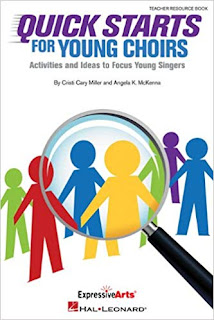
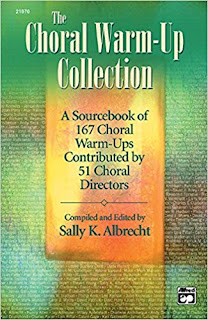
Don't do warm-ups just to warm-up.  Make sure your warm-ups are teaching a skill related to something you are going over in your repertoire that day.  Warm-ups don't have to be anything special, just purposeful.  Here are two books I found especially helpful:

https://www.amazon.com/Quick-Starts-Young-Choirs-Activities/dp/1480342262/ref=sr_1_1?s=books&ie=UTF8&qid=1532802359&sr=1-1&keywords=quick+starts+for+young+choirs
https://www.amazon.com/Choral-Warm-Up-Collection-Sourcebook-Contributed/dp/0739030523/ref=sr_1_3?s=books&ie=UTF8&qid=1532802447&sr=1-3&keywords=choral+warm+ups

5.  Give yourself a break.  

Realize that when you are doing something new, that you have never taught before, you are going to make mistakes.  However, keep in mind that you will slowly have successes too!  No one became a world-class choral director over night.  Be patient with the process and enjoy as your successes begin to build on one another.

6.  Give Back

When you finally get to the point when you know a thing or two about choral directing, don't forget to help out the band director who just got "stuck" teaching choir for the first time in their life!  You will know the feeling better than anyone else.

Catch you next time I have something noteworthy!

Please note:  Noteworthy By Jen is an Amazon affiliate.  Links may be monetized to help support the upkeep of this blog.  

6 Tips for Burnt Out Music Teachers


Feeling burnt out in the music classroom?  Stop feeling overwhelmed and get back to why you love teaching!  Check out these 6 tips to help you feel refreshed instead of stressed!
     Most of us have been there.  You had a great passion for teaching music most of your career, but now you are just done.  Kaput.  Burnt out.  
     I've had my fair share of this as I've gone from K-5 to K-12 this year.  Most of the time I've held it together, but there are some days where I just want to make it through the day so I can go home and not think about teaching anymore.  I can't say I've completely mastered not feeling burnt out (though with 3 weeks left of the school year I would say that's normal!), but here are some tips I have learned through the ups and downs of my year.

1.  Remember why you wanted to teach music to begin with.

     Sometimes going back to the beginning of it all helps take the focus off of the day-to-day and helps you remember the overall picture.  For me personally, I wanted to teach music because it was such a big part of my life growing up.  It was something I was good at, but more importantly, something that fulfilled me.  I am forever grateful for the teachers I had who helped to foster my love of music throughout my life.  I wanted to be that to someone else someday.  I didn't realize how challenging music education would be, but I knew that I could impact the lives of students the way my teachers impacted mine.

2.  Keep a wall of encouragement.

     Students sometimes make our day and we shouldn't just forget about it and move on.  I keep a folder with encouraging notes from students from the entire span of my career.  I also make sure to put notes and student art work up on the walls of my classroom so that I see them when I'm getting discouraged or overwhelmed.  And just when I hit a wall this year and literally wanted to quit education all together, one of my students wrote me a note.
I will NEVER throw this note away.  NEVER.  This student is a dream--so talented and such a wonderful person.  But she's mine and you can't have her ;)  We all have those students we would sob if they left our school, and she's one of mine.  And guess what, she appreciates me!

3.  Choose your attitude.

     Yes, we've all had to do a million PD's on school environment.  A few years ago, our principal had us read a book about the Seattle Fish Market and the concepts they used to make it a positive place for its workers and customers.  I don't know about you, but handling fish sounds way less fun than teaching music, so if they can make handling fish fun, certainly the ideas can help teaching!  One of the mantras we repeat over and over at our school is "choose your attitude."  Yes, it's true, some days I don't want to put on my big girl pants and choose my attitude, but you'd be amazed at how a conscious effort toward thinking positive can help your overall day and year.  Especially when you can help your co-workers do the same thing.  Complaining won't get you very far, problem-solving will.

4.  Surround yourself with positive people.

     I'm lucky to work at one of the best schools in the world.  Seriously.  We don't make a lot of money or have a flashy building, but the people are top notch.  We all work together to accomplish our goals at our school.  It's not about your classroom, it's about how it affects the school overall.  Yet, we still care about each other individually.  I was lucky enough to have a co-worker tell me in the nicest way that she saw how I was becoming negative as the year went on and it bothered her because I wasn't normally like that (thank you K-12 . . . ).  It actually helped me, because it reminded me to go back to the positive person I was before.  Now if you can't find a positive person in your building, make sure that you find someone outside of work who you can meet for coffee (or chocolate) to talk about your struggles in a constructive, problem-solving way.

5.  Go to professional development.

     Sometimes I'm overwhelmed and the thought of going to one more PD makes my head want to disintegrate.  But, most times, PD really helps re-energize me!  One of the best things that happened this year is that I had a clinician come in to work with my choirs.  It really helped give me new ideas and a way to move forward where I felt like the choirs were learning more and sounding even better than before.  I also went and observed another choir classroom for a day.  Those experiences were invaluable to me this year and provided a great pick-me-up!

6.  Re-ignite your own passion for music.

     My friend Bethany and I decided to get season tickets to the Wharton Center this year.  AKA--6 Broadway musical productions in one year!  It has been so much fun to go watch musical theater productions that touch my soul while I am watching them. They also give me new ideas for my own musicals.  And did you know you can use those tickets as a tax write-off?  Back to the real point though--watching a musical makes me remember why I do what I do.  I LOVE music and I LOVE how it affects the people who create it and listen to it.  What are you doing to make sure you remember how much you love music?

I hope these ideas give you something to think about.  I will probably have to come back and read my own post in the future and I'm okay with that.  Don't give up because something is hard, if it's worth fighting for, then do it.

Catch you next time I have something noteworthy!