Ideas for Elementary Rhythm Reading

We all want our students to be competent rhythm readers by the time they head off to secondary music.  How can we keep rhythm reading fresh and exciting for our students?  Check out the presentation below to get lots of purposeful and practical ideas that will have your students engaged and learning!

To find the handout, go here

Catch you next time I have something noteworthy!  

Teaching Music to Neurodiverse Students


If you are like me, you have a wide diversity of students as far as how they think, process, and behave.  The fancy term for this is neurodiversity.  I presented on neurodiversity at The Music Crew virtual conference in July, mainly focusing on autistic students and people with CI.  If you have these students in your music class or have a self-contained music class, this presentation is for you!  

Please note:  I used the term neurodiverse throughout the presentation, but avoided the terms neurodivergent/neurotypical because I was unsure if they were still considered appropriate.  As of this writing, they are still used, so I apologize for any confusion.  

Neurodivergent would refer to people with ADHD, ASD, CI, etc.  

Neurotypical would be people without those divergent thinking patterns.  

I have also learned since recording this that autistic people prefer to use the term "autistic" instead of "people with autism," so please know that if I ever present on this again, I will make those changes!  It's always good to learn and grow!!

Here is a handout to help you if you like taking notes or want to look up the resources mentioned.

I hope this is helpful to you:


Here is the ASD Visual Schedule mentioned in the presentation.

Catch you next time I have something noteworthy!

Tips for Learning Names in the Music Room


One of the biggest challenges for music teachers is to learn the names of all of their students. I have taught anywhere from around 300 to 1,000 students per year. While I LOVE getting to know all of these students, learning their names can be quite a challenge--especially if you are a new to a school. 
 So here are some tips: 

 1. Learning their names is worth it. 

    The first step to learning names is knowing your efforts are worth it.  If we don't take the time to learn their names, why should they take the time to listen to what we have to say? Learning names is part of investing in who they are. 

 2. Have visual reminders. 

    I have popsicle sticks with each students name on it and put them in cups grouped by class. This is an easy way to see their name when you pull a popsicle stick for someone to take a turn during class. Writing out a seating chart with first and last names is also helpful. 

 3. Play name games. 

    There are lots of great name games out there. Some just use their name once, while others use their names with more repetition. If the name is only used once, I say their name over and over in my head trying to memorize it while the rest of the class is singing. 

 4. Say their names as they enter. 

    At the beginning of the school year, I say each child's name as they enter. They know they are supposed to correct me if I get it wrong. I work on pronunciations until I get them the best I can. 

 5. Take a picture. 

    If I am stuck on a student's name, I take a picture of them with their name written on the board behind them, or I have them write it on a piece of paper and hold it in front of them. In fact, I have all second graders write their names and take a picture of them to practice. It's smart to do this on a school device to respect the students' privacy. I do mine on an iPad and then delete pictures as I learn them or make a "learn names" folder of the students I'm still working on. 

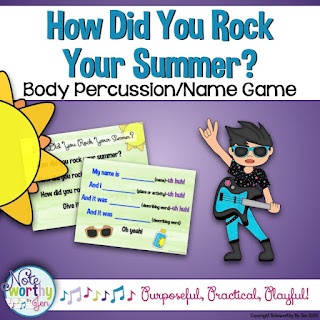
 I hope these tips help you have some strategies to learn names. If you are still looking for name games, here's one my upper elementary students enjoy:
Catch you next time I have something noteworthy!

DIY Orff Mallets

Blog header DIY Orff Mallets with picture of supplies and finished mallet
I don't know about you, but I want my kids to be able to play instruments if at all possible in the upcoming year!  In order to do that, each students will need their own pair of mallets without sharing.  I have searched around for the cheapest way to make mallets that I can find.  This one can be created for about 40 cents per mallet!
Drill, glue gun, wooden dowel, rubber paintball, vinyl end cap

      Supplies:

       ¼” wooden dowels—pre-cut is nice, though 10” length may be more desirable than 12”. Also, precut doesn't leave a sticker residue behind like you get from buying the longer dowels at a home improvement store.  Here's my first try with the lovely sticker residue.  No thanks.

Example mallet with sticker residue


       Drill and 1/4” drill bit, may want to use a smaller bit first
       Glue gun or gorilla glue
       Sterisol concentrate
       Bucket for disinfecting

Optional Supplies:

       Paint for handles so each class has its own color to grab.
       Vinyl end caps if you cut your own dowels or want a clean look.


Steps to Making Mallets:


Step 1 (optional):  Paint the dowels.  Though not necessary, they may hold up better when sanitizing if you paint them first.  You can also cut them down to around 10" or 10 1/2" if you would like, but that is up to you and the tools you have available to you.  

Step 2:  Drill 1/4" hole in rubber paint ball.  (You may want to use a drill bit that's a tiny bit bigger if you have a hard time getting the dowel into the paint ball.)  This is the best part because you get a cool, useless rubber spiral!  I just held the paintball and slowly drilled and it worked great!  Try to get it as centered as possible or your mallets will look funky at the end.

Paintball with rubber spiral coming out
Drilling the paintball


Step 3:  Put a drop of hot glue inside paint ball.  (Honestly, mine were snug even without the glue!)
Insert wooden dowel into paintball.  It may take you a bit to find the best angle to do this, so practice doing it a few times without the glue.  Once you do, it goes quickly.  

Putting rubber paintball on dowel

Step 4 (optional):  Use a drop of hot glue to add vinyl end cap.

Putting vinyl end cap on end of dowel

Your final mallet will look like this:
Home made mallet

I based this mallet on one I had that came with an Orff instrument.  You will see that if you don't cut the dowels, they will be a bit longer than the ones that come with the instruments.  The head of the mallet will also be a bit smaller, but that will make it versatile enough to be used on everything from a glockenspiel to a bass xylophone.  Also, I couldn't find a bigger paintball than 0.68 caliber, so this is the biggest size they have.  


Frankly, I searched for a mallet head that would hold up and not fall apart when drilled (here's looking at you bouncy balls).  Rubber paintballs are the most similar in composition to the original mallet and seem to be much more likely to hold up than anything else I could find.  Wanna hear how they sound?


For sanitizing, I'm going to make enough for all of my students in the morning to use their own set.  I will sanitize during lunch and have enough for everyone in the afternoon to have their own pair.  My current plan is to use this sterisol concentrate that I used to use for recorders and put it in buckets.  The company has said you can use it until it becomes cloudy, but I'm going to change it out every week to be safe.  I think each bottle makes 4 gallons, but can't remember for sure, so check that out for yourself.  I expect it may dye the wooden handles red-ish or weaken the wood, so that may be another great reason to paint handles.
I hope this helps you keep Orff alive in your classroom this year.  If you are looking for another way to teach your students about Orff without actually touching instruments (hello, distance learning!), check out this Orff booklet.
Picture of Student Orff Instrument Book available on TPT

Catch you next time I have something noteworthy!

    Orff Teacher in a Covid World: Non-Singing Activities to Learn About and Make Music

         Music education will certainly be a challenge to navigate this year.  Will we be allowed to sing?  Will we be on a cart?  Regardless, we will join together to come up with ideas that will work for our students because they need us now more than ever.  And, frankly, I need my students too!
         I recently presented some non-singing music education ideas at The Music Crew's Virtual Conference 2020.  If you missed it and would like a chance to see it, here it is:

    Here is a copy of the slides I used if you want to be able to click on the links in the presentation.
    Here is a link to the new Orff booklet for students.  Half off through July 14, 2020 only :)

    The Flossing Song: If You Can't Beat 'Em, Join 'Em!

    Flossing.  

         It's everywhere in every music classroom--and I'm not talking about teeth.  I can't even remember the first student who started doing it in my classroom, but I thank them for introducing me early so I was "educated" when other students began having arms swinging around their hips at maddening speeds that my 36-year-old body cannot even fathom to attempt. 
         Anyway, rather than fight the phenomenon that is sweeping the world, I thought I would go with it and use it to educate my students.

    The Dentist Song (aka--Floss Your Teeth)


    1.  Tell your students you are going to sing them a "boring" song about going to the dentist.  Watch their eyes roll and the groans begin. 

    2.  Proceed to sing the following song:


    You can download your own copy here

    3.  See several student's eyes light up as they realize where you are really going with this song--and yes, you are going there . . .

    4.  Have a short discussion about whether the motion for flossing is in sets of 3 or 4.  I highly recommend performing the floss in slo-mo saying "Floss, out, across.  Floss, out across." Hopefully that will give a few of them a hint that the answer is 3.  This is a great time to talk about meter and/or time signatures for a hot second (I don't advise a lengthy discussion at this point because their hips are all itching to floss and they can only pay attention for -0.2 nanoseconds.)

    5.  Field 20 comments about how your flossing isn't up to snuff in their world.  Hint:  Do NOT bend your knees while flossing--this was my fatal error when I first began.  Also, apparently there is something incorrect with how I hold my wrists, perhaps some PD will teach me how to perfect my floss some day.  One can always dream. . .

    If you REALLY need help flossing, watch this:


    6.  Have students floss TO THE BEAT.  This a new concept to them.  They have been flossing wildly to incorrect meters for a year now, so this may be harder than you think.  (Note:  Assure kids who can't floss that they won't have to stand up in front of the class, but to do their best.  It's best to show them what your first attempt at flossing looked like so they don't feel intimidated.)

    7.  Have a "floss off" in which all students compete to "floss to the beat" in order to be one of 5 finalists who compete in front of the class.  Choose 5 students who can actually floss to the beat to come up front--impressive!  (Note:  It may take a few times through the song to see the 5 finalists.  Something about 28 sets of swinging arms does crazy things to your eyes . . .)

    8.  Have finalists floss together in front of the class.  Classmates get to vote 2 times (this assures everyone should get some votes!).

    9.  Shower the winner with your admiration.  (Note:  Also, take a video of their style so next year YOU will be able to win the competition ;)

    This music is free for educational use only.  Enjoy and share with others!  May your hip flexibility improve after teaching this to several classes in a row without a break.  Hey, you're tough, you're a music teacher!

    Catch you next time I have something noteworthy (or flossworthy)! 

    Tips for Secondary Teachers "Stuck" in Elementary Music


    Teaching lementary general music is a fabulous opportunity, but if you used to be a band/orchestra/choir director and you get thrown into an elementary position, it can be overwhelming!  Here are some thoughts from my 14 years in the elementary music world:

    1.  You will be okay.  The teaching experiences you already have will be beneficial to you!  Think about what you want students to know by the time they get to middle school and base your curriculum on that.  Also know that younger kids need to first feel/experience a musical concept to put a name with it--if you just put definitions on a board, students aren't going to keep that information well. 

    2.  Go to Orff, Kodály, Music Learning Theory, Dalcroze, or Education Through Music workshops as soon as you can find one near you.  Not only will you learn valuable teaching ideas and lessons, you will also network which is imperative for you!  You need to have someone to ask questions to! 

    3.  Speaking of Orff, Kodály, and Music Learning Theory--take a levels course for one or more of these during the summer, it will explain so much about elementary music teaching to you.  The courses are normally 2 or 3 weeks long, but they are life changing!  If you aren't sure which one to take, you can research it.  Here's a comparison between Orff and Kodály level 1

    4.  Find a curriculum to pull activities from so you don't have to kill yourself coming up with lesson plans your first year.  You may even want to teach the same lessons to K/1, 2/3, and 4/5 so you are only coming up with 3 different lessons each day you see your students instead of 6!  There are tons of curriculum options out there--ask in the elementary music teacher page on Facebook to see what other teachers like and why.  You will have to find something that fits your style.  Teachers Pay Teachers is also an incredible resource for general music teachers!  You can find classroom decor, games, movement activities, sub tub supplies, composer of the month/music history, and other resources that will greatly impact your teaching!

    5.  Your first week of school should be about setting clear expectations and learning names.  If you are totally new to this position, it will likely take you 2-3 weeks before you have most names down.  It will feel overwhelming at first, but it is worth it and means everything to your students.  Find name games on Pinterest and through music teaching blogs.  Don't worry about teaching content until you know names! 

    6.  You need to know that kindergarten students are like a bunch of kittens or puppies at the beginning of the school year.  Find simple activities such as a few games where they stay in one spot, sing a book to them, or games where they sit.  Perhaps create posters for a few classic kid songs (Oh Mr. Sun, Down By the Bay, Old MacDonald, etc.) and sing those with them to help them become comfortable with singing.

    7.  Use your strengths!  If you are a great vocalist, rely on activities that feature your voice.  Those with instrumental backgrounds might be more comfortable working on Orff instruments (I recommend Mallet Madness or As American As Apple Pie as a good place to start).  Keep in mind KG and 1st grade students won't be able to do much with instruments yet other than learning to hold mallets and keep a beat.  If you are a great guitar player, your students will love to do activities while you strum along.

    8.  Your "go to" elementary music resources (besides Teachers Pay Teachers) will be West Music, Music Is Elementary, and Music In Motion.  Check out their catalogs--it may be worth spending a bit of your own money to have less stress in your life, and you will use it for years to come!

    9.  Games are everything in elementary music!  Students at this age love to play!  Check out Chicken on the Fencepost, Doggie, Doggie, Shanghai Chicken, Pass the Beat, and Bow Wow Wow to get started!

    There's so much to learn about teaching elementary music, but hopefully those ideas will give you something to think about.  I'm sensing that I might need to write on this topic a few more times in the future! 

    Catch you next time I have something noteworthy!

    Please note:  Noteworthy By Jen is an Amazon affiliate.  Links may be monetized to help support the upkeep of this blog.  This affiliation does not influence my honest opinion on book reviews or resource recommendations.  

    Faith and the Classroom: Can they co-exist?

      
         I'm currently listening to a book called, "Girl, Wash Your Face" by Rachel Hollis.  First of all, if you are a woman and you haven't read it, you should.  Second of all, if you are a woman and you haven't read it, you should.  She talks about her life with complete openness in a way that is utterly refreshing.  As I have written music teaching blog posts, I have struggled to find my "niche," because it feels like it's all been done before.  However, listening to this book has made me realize that there is one music teaching blog that is totally missing . . . the one with complete honesty about the everyday things, and perhaps a touch of humor.  So from now on, not all of my blog posts will be a cute activity that you can use in your classroom, but more about "the struggle is real" sort of stuff.  Not that I will never share a fun activity--cause we ALL need those!
      
         So, without further ado, let's talk about faith in the classroom.  Let me start by saying, my first reaction to writing this post is that surely I will get FIRED for writing it.  Surely, some parent or administrator will stumble upon this post, read it, decide I am converting students, breaking my contract, and must be immediately removed from my classroom.  My next fear is that any of you who don't have religious beliefs or who have different beliefs than me will immediately block me from your life (hey, if you really need to, you have my permission!)  Now, before you get all worried that I'm going crazy, that's not what this post is about at all. . .
      
         I am a Christian.  There, I said it.  I go to church on Sunday to worship God.  I am not the best Christian, I don't do devotions everyday or volunteer for 10,000 things at my church, but my underlying belief is that God created us, He's in control, and I am not in ultimate charge of my life (cue the internet trolls). 
      
        I teach in a public school.  I also believe in separation of church and state.  WHAT??!!  Yup.  I think it's a great concept . . . but hear me out.  Our country was based on the idea that you can hold (or not hold) whatever religion you want to and that the government can't force you to change that.  Our schools are funded by the government and therefore, they need to stick to that belief.  Wow, now you think I'm a SUPER terrible Christian.  But I love separation of church and state because it protects my own family.  I don't have to worry that a teacher at my child's school is going to tell them they have to have certain beliefs.  I value that SO much, that I want that for other people's children too.  I'm not talking about what music you program, that's a completely different post.  So, why is this post titled, "Faith and the Classroom?"  Because my faith changes everything about my classroom.
      
         Note:  I will never present my faith in my classroom, period.  I might mention that I saw a student at VBS over the summer, but that's making a personal connection, not spreading the gospel.  I think all good teachers make personal connections, so it's okay to ask students about their church if they mention they go to one.  And if they mention they are a Jehovah's Witness, though you may totally disagree with their religious beliefs, it's super important that you honor their religion, because chances are, another teacher out there is honoring your choice of religion with your child even though it contradicts theirs.  

         So, how does faith affect my teaching?  I pray for my students--especially those little buggers  who can make it challenging to get through a lesson (okay, not really buggers, but you know what I mean).  The result?  I have increased compassion and a deeper love for the kids in my classroom.  I pray that I will love each child who walks through the door of my classroom.  Not some sort of mushy, gushy love, but the kind of love that says, "I will not give up on you no matter what happens."  I think every child deserves that from us, because it's quite certain that not all of them get that at home.  I reflect on my teaching to see if I create an atmosphere with the kind of love Jesus showed to people--not judging, but accepting!  When stuff with co-workers pop up and there's lots of grumbling going around, I try to be a problem solver instead of adding fuel to the fire.  I think that's how God would want me to approach it.  How about the fruits of the spirit?  Have I reflected on how those have been apparent in my teaching?  And guess what, if you believe something totally different than me, how can you use your beliefs to make your classroom a better place for your students?  I'm sure your beliefs can inspire you in your own classroom.   I think keeping this part of our faith (or non-faith) is essential, because then our students get our best!

         So go out there, think about your beliefs, and rock it in your classroom.  You students will never know what's powering you, but boy will they benefit from it!  It will also help keep you from burning out yourself, which is a huge bonus :)
     
         Catch you next time I have something noteworthy!

    PS--If you have other teachers who are Christians (or not--this book is great for everyone) and you want to start reading an awesome book about teaching that also mentions faith, check out this:

    https://amzn.to/2MSwKf5
    Maybe you could meet after school one day each week to talk about what you learned, or pray for your students.   If you really want to dig deep, you could add in the Bible study that goes with it.  Enjoy your school year!
    https://amzn.to/2oapNYZ
    Please note:  Noteworthy By Jen is an Amazon affiliate.  Links may be monetized to help support the upkeep of this blog.  This affiliation does not influence my honest opinion on book reviews or resource recommendations.  

    You Want Me to Teach Choir?!


    If there's one thing I know about, it's getting thrown into a teaching position I never expected.  I taught K-12 for two years which included K-5 general music, middle school choir, and high school choir.  Though I had been in choir myself and had even student taught in middle school choir, it had been soooooooo many years, I might as well have been starting over.  I learned A LOT in those two years and I'm glad to pass on the most helpful things I learned. 

    1.  Find a mentor teacher in the area.

    Mentor teachers are EVERYTHING when you are teaching something new to you.  Go observe them, have them come observe you.  Go to see more than one person so you can see different styles of teaching.  You will learn more just observing and asking questions at the end of the day than most books will ever teach you.  Ask them to see their choral handbooks, sight-reading, and any books they recommend to learn about choral teaching. 

    2.  Seek out professional development opportunities.

    Who says an old dog can't learn new tricks?  My choral directing and understanding of how to teach choir came so far in just two years.  Much of it came from going to workshops where I could learn from the best of the best.  Join your state vocal music association so you can network with other teachers who can point you in the right direction. 

    3.  Check out Christine Bass  

    (no, she is not paying me to say this--in fact, she doesn't even know me!)

    If you need tips on how to help your non-audition choir and above learn the basics, this woman is for you!  I saw Christine Bass present and she was exactly what every new choral director needs in their life.  Check out her book and I guarantee it will help you.  She also has real video examples of what her choirs sound like at the beginning of the year and what happens along the way.  It's real life!
    https://www.amazon.com/Front-Loading-Your-Choral-Rehearsal-Constructing/dp/1495097145/ref=olp_product_details?_encoding=UTF8&me=&qid=1532800593&sr=8-1

    4.  Get some good warm-ups in your tool belt.

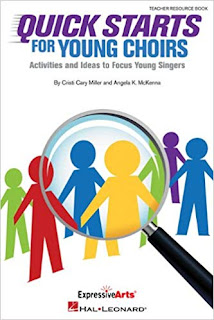
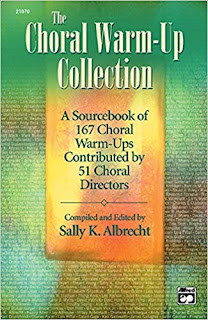
    Don't do warm-ups just to warm-up.  Make sure your warm-ups are teaching a skill related to something you are going over in your repertoire that day.  Warm-ups don't have to be anything special, just purposeful.  Here are two books I found especially helpful:

    https://www.amazon.com/Quick-Starts-Young-Choirs-Activities/dp/1480342262/ref=sr_1_1?s=books&ie=UTF8&qid=1532802359&sr=1-1&keywords=quick+starts+for+young+choirs
    https://www.amazon.com/Choral-Warm-Up-Collection-Sourcebook-Contributed/dp/0739030523/ref=sr_1_3?s=books&ie=UTF8&qid=1532802447&sr=1-3&keywords=choral+warm+ups

    5.  Give yourself a break.  

    Realize that when you are doing something new, that you have never taught before, you are going to make mistakes.  However, keep in mind that you will slowly have successes too!  No one became a world-class choral director over night.  Be patient with the process and enjoy as your successes begin to build on one another.

    6.  Give Back

    When you finally get to the point when you know a thing or two about choral directing, don't forget to help out the band director who just got "stuck" teaching choir for the first time in their life!  You will know the feeling better than anyone else.

    Catch you next time I have something noteworthy!

    Please note:  Noteworthy By Jen is an Amazon affiliate.  Links may be monetized to help support the upkeep of this blog.  

    Oompa Loompa® Costume Idea

    Willy Wonka KIDS® is one of my ALL TIME favorite MTI KIDS® shows.  It has everything a child (and their parent) enjoys in a musical--great music, nostalgia, candy, bright colors, a funny plot, and lots of opportunities to showcase students.  One thing that may hold you back is the costumes.  While it can be a bit overwhelming, here is a simple and cheap costume for an Oompa Loompa!  The cost is around $5 per child. 

    (Please note, I have no association with Willy Wonka or MTI KIDS, just a music teacher helping other music teachers!)

    Supplies Needed:  

    1.  Plain brown t-shirt:  I have students order them through me.  I have also found that parents would much rather send in $3 than have to go find a shirt themselves, which would likely cost more at a store anyway. A huge bonus of ordering the shirts together is they are all the same color and you can make sure ALL students have one (even if you have to pay for it!).

    2.  Green tinsel wig:  I have used two different kinds over the years.  We had to cut "bangs" for each child on them, but the classroom teachers were happy to help!  You may want to test one out before you buy them in bulk--some shed a bunch and others don't.

    3.  Glue gun and glue sticks:  Go with a big glue gun, not a small one.

    Photo used with permission
    4.  White felt (rotary cutter, mat, and ruler are helpful but not necessary):  Cut the felt into two inch strips and hot glue on to the t-shirt to create the look of suspenders.  Ask for some volunteers who know how to quilt and they will cut your felt for you in 1/10 of the time you could do it with regular scissors.  If you want to add buttons on the bottom of the suspenders, you can use a marker to draw a button, but it's up to you!

    5.  Orange body paint:  Use cotton swabs to draw orange circles on the cheeks of your Oompa Loompas for extra fun!

    Have students wear jeans or another type of pants they would already have at home and you are all set!  I normally have around 80 Oompa Loompas because they are my chorus.  If you cast differently and only have a few Oompa Loompas, you may want to invest in matching pants.  

    Congratulations!
    You have created one awfully adorable (and cheap) Oompa Loompa!  Now go break a leg!
    Photo used with permission

    Catch you next time I have something noteworthy!

    5 Favorite Ikea Finds for the Music Classroom

    Ikea is soooo addicting, so the last time I went, I wanted to see if there were any great finds for my music room!  Here are my top 5 finds:

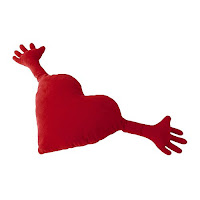
    1.  Famnig Hjärta (Heart cushion) $4.99 

    http://www.ikea.com/us/en/catalog/products/10036433/Imagine the possibilities of showing how to keep a beat with this lovable cushion!  I love the constant visual reminder that the beat is steady, like our hearts!  Also, I asked about if they were going to have mini-versions and they said they will have them around Christmas.  Guess who will be making a special trip for those :)


    2. Kalas (cups) $2.49 for 6  

    http://www.ikea.com/us/en/catalog/products/10192956/I bought a class set of these for cup games.  They are the perfect size for kids' hands, and the colors and durability make them a sure winner for both students and teacher.  In addition, I thought they might be used as a nice visual to show form in music.


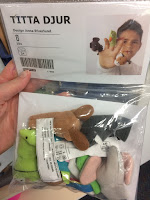
    3.  Titta Djur (Finger Puppets) $4.99 for 10

    http://www.ikea.com/us/en/catalog/products/90159340/?query=titta Finger puppets are great for kindergarten students!  Use them as beat buddies to keep the beat.  Have them sing to their puppets.  Use the puppets as inspiration for movement (ex. move the way your puppet would, now trade with a friend).  They also could be used to show patterns in music.  And that fact that there's a shark in there will thrill them!  It might even convince me to do the baby shark chant this year, which is great for practicing beat.


    4.  Sötvatten (smoothie straws) $1.99 for 100

    http://www.ikea.com/us/en/catalog/products/20349914/?query=S%C3%96TVATTENThere are lots of uses for straws such as tapping the beat or using them as replacements for mallets for that ONE student who can't seem to stop touching the instrument when you are giving directions.  But when I went K-12 and taught choir, I learned that these thick straws can help students understand how it feels to breathe correctly when they sing.  Using a regular sized straw doesn't have the same affect, you want the thick smoothie straws.  Have students breathe in while holding the straw in their mouth.  Make sure they are standing tall and don't let them lift their chest.  Voila!  They now have used their diaphragm!


    5.  Gestalta (artist's figurine) $5.99

    http://www.ikea.com/us/en/catalog/products/40255462/This is my FAVORITE find!  Talking about movement with students, this figurine makes a great visual.  Use it as a reminder for that one move they aren't doing right when teaching choreography.  Better yet, have students make their own freeze dance figure while the other students dance, then pause the music and have the class copy what the gestalta is doing!  

    What finds have you made at Ikea??  Please email them to me at noteworthybyjen@gmail.com.  
    Catch you next time I find something noteworthy!

    The Loss of a Student: A Music Teacher's Perspective

         This has been the hardest blog for me to write.  Somehow I feel my words will fall short of what I really want to say.  Honestly, I was hoping I would never have to even think about one of my students dying, but October 14, 2016 changed my life forever.  First, a little background . . . .
         I have been teaching in my small-town school district for 11 years--that means EVERY student who attends the elementary is stuck with me for at least 6 years :)  And, since I teach K-12, some of them choose to journey on with me even longer (which I consider to be a great honor).  This October marks the first time I have lost one of those precious students--and it turned my world upside down.
    Kennedy Raye Tennant was a beautiful and lively girl who I had the privilege of teaching for 7 years (I hate that I have to use past-tense verbs--it's so wrong).  On the morning of October 14, she was killed in a car accident on the way to school.  Her older brother and sister were also in the accident, and though their injuries were serious, are on the road to recovery.  I'm very thankful for that, since both of them were former students of mine as well! 
         I teach my mornings at the elementary and then go to the middle/high school after lunch.  I heard within an hour or so of school starting that a student had passed away, but I didn't know who.  I saw the teary eyes of other teachers who had heard who it was.  I asked one of them if it was a former student from the elementary and they nodded.  I decided I should get through the first half of my teaching day before I let myself know the terrible news.  The elementary kids didn't know what was going on and I knew I wouldn't be able to hide it once I knew.  And to be honest, I could tell from the looks on people's faces, this wasn't just a student, it was one of those students who has everyone's heart strings.  
    Kennedy--Always a fashionista!
         After the last elementary class left my classroom, I reluctantly read my email.  The second I saw who the family was, my heart was broken.  This family is SO involved in our community and are such positive supporters of our school district in every way.  To have them lose a child seemed simply unfair.  And to have them lose their baby--Kennedy . . . . I put my head down on my desk and sobbed.  Not just cried--my body was shaking and I could barely fathom what I had just read.  It just shouldn't be--NO 6th grader should die.  No kid should die.  NO STUDENT should die.  Maybe it's just that NO ONE should die. 
         The teacher's lounge was so quiet during lunch.  I  asked around what they thought it would be like when I got up to the high school.  I didn't know what to expect.  I had a friend die when I was a freshman in high school, so I knew how many of the students were feeling, but I didn't want to downplay how fresh their hurt--no, OUR hurt was for Kennedy. 
         When I got to the high school, it was nearly deserted.  We still weren''t certain if Savannah and Nolan were going to be alright, so all of their friends were super upset.  And honestly, Kennedy was one of those kids who grew up going to everything with the "big kids."  She was at high school basketball practices and hung out with her older siblings' friends.  She was everyone's little sister.  This wasn't just any student, she was arguably the princess of our whole school district.  I'd like to take a moment to tell you about her.
         Kennedy was sassy.  She was ALWAYS smiling.  She was friendly and outgoing.  She was fiercely competitive in sports, but very sweet in person.  She knew how to wiggle her way into the heart of anyone she met.  She was a great singer and a fun dancer.  She wore dresses for at least 2 years straight when she was a little girl and she possibly had the thickest most gorgeous hair I have ever seen on a kindergarten student.  She was a diva--but in a way that everyone loved her.  Including me. 
    How I remember Kennedy when she was little!
          You see, you don't just go to school every day as a teacher and only think about the objectives you are teaching.  My students are my "2nd set of kids" as I like to call them.  Sure, not all of them love my class or love me, but I love them.  I try to figure out what makes them excited about learning and try to integrate it into my class.  For some of them, like Kennedy, that comes easily, because she already loved to sing and dance.  And for those students who audition for parts in shows, like Kennedy, an even deeper bond is formed.  Let me tell you, that girl was one spunky Junior Djinn (dancers for the genie in Aladdin).  And for music teachers, like myself, I didn't just have one year of great memories with Kennedy, I had SEVEN.  She was one of the little kids I looked at and always thought, "Boy, I can't wait to see what she's like in high school."  I'm deeply grieved that I will never get to know.  And even more grieved that her family will never get to know.  Savannah lost her only sister--I can't imagine that pain.
         The following days were terrible.  We didn't do a whole lot of academic learning at the middle and high school those following days, but they were learning a very hard lesson about life.  Some days we sat and talked about Kennedy, other days it was less organized "free time," which trust me, felt nothing like free time.  We had to move our choir concert because I just couldn't imagine making students perform when we returned to school on Monday.  It was the right call. 
         Our middle school students asked if we could dedicate our re-scheduled concert to Kennedy.  I was so pleased they asked, because I needed a way to work through my grief for this little girl, and I didn't know where to begin.  We began practicing our concert songs again and each class nominated and voted on one song to sing for Kennedy.  Her family came to the concert, which I was so grateful for, and we all sobbed through the songs for Kennedy.  I will ALWAYS think of Kennedy whenever I hear those two songs again--and for that I am thankful!
         I would be lying if I didn't add in that I was an extremely emotional teacher for about a month after Kennedy died.  I've never cried because a class or a student "got to me" before, and I let it happen a few times.  It was really hard for me to understand how students could be rude and disrespectful after an event that taught us how precious life really is.  But, I suppose my students didn't understand how deeply I was hurting for Kennedy and her family.  I don't think they even have a clue how much I care about each and every one of them.  And perhaps, they were just being teenagers and oblivious to what was going on around them.  I wish I hadn't "lost it" and cried a couple of times, but honestly, I was broken and still mending, but also trying to be at school to help the students.  It was too much for me to hold it together. 
    6th Grade Kennedy
         Time has helped some.  I don't cry every day, but I am crying as I write this blog today.  I feel sorrow when I see Kennedy's family--incomplete without their little diva.  They have been so open about their grief and how they are doing, which I really appreciate.  So I want to leave you with something that was said multiple times as a motto of Kennedy's family--"I love you more."  Be the rainbow in someone else's cloud.  You can never know what's on the horizon for you, your family, or your students, but you can choose to make the most of each and every day you have.
          Thanks for letting me share my journey with you.  And to Kennedy--it was a pleasure to have the privilege to teach you.  I will always be thankful that out of the millions of teachers in this world, I was blessed enough to get to teach you.  And thanks for stopping by just to give me a hug at the beginning of the school year.  You will never know how much that means to me today.  I love you more and I hope to see you again some day!  Mrs. Filipiak


    Photos used with permission. 

    Organize Volunteers with Less Work

        I became K-12 last year, so I was looking for any and everything that could save me time.  I had post-it notes covering my desk before school even started!  During all the chaos, I kept getting e-mails from VolunteerSpot (now called SignUp.com) telling me their website was "free" to use and could help organize my volunteers.  Hmmmmmm. . . . okay, I was desperate, so why not give it a whirl?
         I set up VolunteerSpot to organize people bringing desserts for my fall choir concert (my FIRST secondary concert EVER!).  Guess what?  It was all that I had hoped it would be--and a little bit more!  So please let me tell you about it in case it will help you next year in your teaching!  I imagine you could use this for costume prep, parties, parents volunteering to help students learn speaking lines, etc.  Sound good?  Yep!

    http://signup.com/

    What is SignUp.com?

         SignUp.com is a website that allows you to create an event and describe what volunteers you need.  You are then able to share this event with others through e-mail, a link, social media, or a button on your website.  Parents can follow the link to see what volunteers are needed and can sign up without you being the middle man (or woman)!

    (I think a tear may be rolling down my cheek . . .)

    How do you use it?

    1.  Sign up for an account using your school e-mail so that all communication goes to your school e-mail.  Then it will take you to your Dashboard.  This is where you get stuff done!

    2.  Click on "Create New Sign-Up." 
     
    3.  Pick a date to create an event:
    4.  Add spots for the volunteers you need: (You can even create a repeating schedule!)
    Here's what it looks like when you add multiple spots:  

    5.  When you are done creating spots and click "Next" it will take you to back the calendar view--but don't stop there!  Go to the bottom and click "Next."  It will take you to a page where you can customize your event's appearance to match the theme.  LOVE this!  Pick an icon, then scroll down to pick the background design.  Click "Next" when you're done.
    6.  Pick an option for how you would like to share it with parents.  I personally send the e-mail to myself and then copy it to my choir parent lists.  But do whatever works best for you!
    7.  Then you can finally click "Done!"  It will show you all of the nifty features you will be able to add if you go premium, but for my purposes I haven't needed that :)  To go back to see your event, you can click "Dashboard" in the upper left corner.  Here's what it looks like under "My Sign-Ups" now.  (I signed up for a volunteer spot so you could see what it shows you.) 
    8.  Click "Preview" if you want to see what parents will see when they go to sign up.
    9.  Go back to "My Sign-Ups" on your Dashboard.  If you click on the title of the event.  It will take you to the calendar view.  Click on your even in the calendar view and it will pop this up:
    Pretty nifty, huh?  

    It gets better:  This website sends reminders on its own to the people who sign up--YOU DON'T HAVE TO REMEMBER TO DO IT!  However, if you want to send a message or a thank-you to your volunteers, go to "My Sign-Ups" and click on "Manage" and then "Messages."  You can also print reports, etc. to see the status of your sign-up all through the "My Sign-Ups" section.  LOVE IT!

    Is it really FREE? 

    YES!  As far as I can tell, unless you are someone who has to organize a marathon, I think you will be more than happy with the FREE package!  You can always upgrade to premium if you really want to :)

    Is it worth the time?

    Yes, there's a small learning curve when using SignUp.com, but it pales in comparison to the amount of time I used to spend making flyers, sending e-mails, and making phone calls!  Work smarter, not harder right? 

    Give it a try and let me know how you used it!  I would love to hear how you saved time!

    Catch you next time I have something Noteworthy!

    6 Tips for Burnt Out Music Teachers


    Feeling burnt out in the music classroom?  Stop feeling overwhelmed and get back to why you love teaching!  Check out these 6 tips to help you feel refreshed instead of stressed!
         Most of us have been there.  You had a great passion for teaching music most of your career, but now you are just done.  Kaput.  Burnt out.  
         I've had my fair share of this as I've gone from K-5 to K-12 this year.  Most of the time I've held it together, but there are some days where I just want to make it through the day so I can go home and not think about teaching anymore.  I can't say I've completely mastered not feeling burnt out (though with 3 weeks left of the school year I would say that's normal!), but here are some tips I have learned through the ups and downs of my year.

    1.  Remember why you wanted to teach music to begin with.

         Sometimes going back to the beginning of it all helps take the focus off of the day-to-day and helps you remember the overall picture.  For me personally, I wanted to teach music because it was such a big part of my life growing up.  It was something I was good at, but more importantly, something that fulfilled me.  I am forever grateful for the teachers I had who helped to foster my love of music throughout my life.  I wanted to be that to someone else someday.  I didn't realize how challenging music education would be, but I knew that I could impact the lives of students the way my teachers impacted mine.

    2.  Keep a wall of encouragement.

         Students sometimes make our day and we shouldn't just forget about it and move on.  I keep a folder with encouraging notes from students from the entire span of my career.  I also make sure to put notes and student art work up on the walls of my classroom so that I see them when I'm getting discouraged or overwhelmed.  And just when I hit a wall this year and literally wanted to quit education all together, one of my students wrote me a note.
    I will NEVER throw this note away.  NEVER.  This student is a dream--so talented and such a wonderful person.  But she's mine and you can't have her ;)  We all have those students we would sob if they left our school, and she's one of mine.  And guess what, she appreciates me!

    3.  Choose your attitude.

         Yes, we've all had to do a million PD's on school environment.  A few years ago, our principal had us read a book about the Seattle Fish Market and the concepts they used to make it a positive place for its workers and customers.  I don't know about you, but handling fish sounds way less fun than teaching music, so if they can make handling fish fun, certainly the ideas can help teaching!  One of the mantras we repeat over and over at our school is "choose your attitude."  Yes, it's true, some days I don't want to put on my big girl pants and choose my attitude, but you'd be amazed at how a conscious effort toward thinking positive can help your overall day and year.  Especially when you can help your co-workers do the same thing.  Complaining won't get you very far, problem-solving will.

    4.  Surround yourself with positive people.

         I'm lucky to work at one of the best schools in the world.  Seriously.  We don't make a lot of money or have a flashy building, but the people are top notch.  We all work together to accomplish our goals at our school.  It's not about your classroom, it's about how it affects the school overall.  Yet, we still care about each other individually.  I was lucky enough to have a co-worker tell me in the nicest way that she saw how I was becoming negative as the year went on and it bothered her because I wasn't normally like that (thank you K-12 . . . ).  It actually helped me, because it reminded me to go back to the positive person I was before.  Now if you can't find a positive person in your building, make sure that you find someone outside of work who you can meet for coffee (or chocolate) to talk about your struggles in a constructive, problem-solving way.

    5.  Go to professional development.

         Sometimes I'm overwhelmed and the thought of going to one more PD makes my head want to disintegrate.  But, most times, PD really helps re-energize me!  One of the best things that happened this year is that I had a clinician come in to work with my choirs.  It really helped give me new ideas and a way to move forward where I felt like the choirs were learning more and sounding even better than before.  I also went and observed another choir classroom for a day.  Those experiences were invaluable to me this year and provided a great pick-me-up!

    6.  Re-ignite your own passion for music.

         My friend Bethany and I decided to get season tickets to the Wharton Center this year.  AKA--6 Broadway musical productions in one year!  It has been so much fun to go watch musical theater productions that touch my soul while I am watching them. They also give me new ideas for my own musicals.  And did you know you can use those tickets as a tax write-off?  Back to the real point though--watching a musical makes me remember why I do what I do.  I LOVE music and I LOVE how it affects the people who create it and listen to it.  What are you doing to make sure you remember how much you love music?

    I hope these ideas give you something to think about.  I will probably have to come back and read my own post in the future and I'm okay with that.  Don't give up because something is hard, if it's worth fighting for, then do it.

    Catch you next time I have something noteworthy!

    K-5 to K-12--Part 1: Observations

    I had 10 years of K-5 teaching under my belt last year and was comfortably living "the dream."  I knew the routine for shoe-tying, nose picking, puking, elementary musicals, and all other fun elementary experiences.  AND THEN THEY MADE ME K-12!!!! 


    Horror, panic--no wait a minute, I GOT THIS!  No I don't.  NO I DON'T.  Breathe, just breathe.  Everything will be okay . . . . . . . maybe.  I hope?  No, I CAN do this. . . . perhaps?

    Such were the roller coaster thoughts of my brain as my whole teaching world was changed.

    Flash forward:  I have successfully "survived" 7 months of being K-12 (elementary and choir).  It has been a ton of work, not gonna lie.  But, I thought I would write a blog post about my observations as a "first year" K-12 teacher.  I hope to add other K-12 posts in the future.  Perhaps it will offer some hope or help to those of your in similar situations.  If nothing else, I hope it offers the feeling that you aren't alone. 

    Observations:

    (Keep in mind I went from elementary to K-12, so my observations will be about the 7-12 land . . . )

    1.  Hormones:  Be ready for a whiplash of emotions from a lot of your students.  

    Downside:  It would be amazing if they stayed in the same mood for two days in a row so I could figure this thing out!  I've had to learn not to take their moods personally.  You would think I would know this from 10 years of prior teaching, but nope!  It's a new type of patience to not respond to the ebb and flow of their teenage worlds.  Not to mention teaching students who tower over me . . .

    Upside:  They understand emotions more when they sing.  They can connect with the music.  They get the goose bumps when something musically beautiful happens.  And they want to sings songs about love that my elementary kids always thought were "gross." 

    2.  Words:  They know how to explain their thoughts better now.


    Downside:  In elementary you tell a student to stop talking and they do.  In middle and high school they look at you and tell you they weren't talking to begin with.  (Ummmmm, then why were your lips moving when we weren't singing?)  And then they huff and puff for the rest of class and you are sure they are snap chatting evil things to their friends about you later that day.  I still haven't figured out Snap Chat . . . that's a lesson for another day! 

    Upside:  They are smart.  Really smart.  I LOVE the ideas that some of them come up with.  Not to say elementary students don't, but I really love that some of them have such deep thoughts and passions now.  Politics.  Social justice.  Music.  Rap.  Fashion.  Sports.  Acting.  I love the connections I can make with my students about their interests.  And they get more of my jokes now!  Which they sometimes groan about, but hey, I'm just happy to have an informed audience!


    3.  Friends:  Mean everything to them now.


    Downside:  Their phones are their third arm.  And they don't seem to understand that they don't need them every second of the day.  If I have to tell one more person to put their phone away . . . Oh, and they make choices based on their friends rather than what they actually want to do.  I guess I forgot about that part of being a teenager. 

    Upside:  Their friends motivate them.  Positive peer pressure is a great tool for getting students to learn and inspire each other.  Not gonna lie--I feel like I need to get more of the "positive" thing rolling in my 7-12 classes this year.  But I know it took me several years to really feel comfortable at K-5 and I have to expect something similar in the 7-12 realm. 


    4.  Self-Awareness:  In other words, they are often only aware of themselves :)


    Downside:  Think back to when you were a teenager.  Did you ever REALLY focus on what other people needed, or were you mostly concerned about yourself and how others saw you?  Teenagers are painfully aware of how others see them to the point that it is tough for me to watch.  I just want to tell them to be who they are and stop worrying about what other people think!! 

    Upside:  They want to be loved and accepted by everyone--including you!  What have you done to make sure your students know you care about them?  Some things I have done:  gone to sporting events, sent post cards home about positive things I've appreciate about them, watched TV shows they like so I can talk about it with them, let them pick a One Direction song for our Pops Concert (please don't judge me!), shake their hand at the door (which they WILL adjust to, I promise), stretch to music they like on Fridays, etc.  AND, I really enjoy it.  It's the best part about my job--that I get to build someone up who I genuinely care about (an may remember me in the future since I didn't stop teaching them in 5th grade)  :)


    I have a gazillion more thoughts, but these were the few I chose to write about today.  I would love to hear from other K-12 teachers.  Or even secondary teachers--good advice is always welcome!

    Catch you next time I have something Noteworthy!